|  |
| |


Curriculum Organisation and Classroom Practice in Primary Schools (1992) Curriculum Organisation and Classroom Practice in Primary Schools (text) |
Curriculum Organisation and Classroom Practice in Primary Schools: A discussion paper (1992) London: Department of Education and Science 1992
Background notes Historical context In 1991, with a general election looming and Labour ahead in opinion polls, education secretary Kenneth Clarke decided that a return to streaming and more formal teaching methods in primary schools would be a popular campaign policy for the Conservatives. On 3 December 1991 he announced that he had commissioned Robin Alexander, Jim Rose and Chris Woodhead (pictured, left to right) to produce a discussion paper on Curriculum Organisation and Practice in Primary Education. It would be published by the end of January 1992. The time of year and the choice of three men to write it led to its becoming popularly known as the 'Three Wise Men Report'.
Robin Alexander
He taught in schools and colleges before becoming Professor of Education at Leeds (1977-95) and Warwick (1995-2001). He went on to hold a variety of posts at Cambridge and York, and became Director of the Cambridge Primary Review in 2006.
Jim Rose
He joined HMI in 1975, becoming Chief Inspector of Primary Education and then Director of Inspection for OFSTED. He retired in 1999, but was later invited to lead several reviews, including the 'Rose Review' of the Primary Curriculum in 2009.
Chris Woodhead
After holding a number of teaching posts, he moved into teacher training, becoming a tutor on the Postgraduate Certificate of Education (PGCE) course at Oxford. His later career included administrative posts in Devon, Shropshire and Cornwall; he was chief executive of the National Curriculum Council (NCC) from 1991 to 1993, and of the School Curriculum and Assessment Authority (SCAA) from 1993 to 1994. In 1994 he was appointed head of Ofsted.
The Three Wise Men Report Written in just one month, the report certainly caused much controversy. Teachers who had been brought up on Plowden regarded it as an attack on their most dearly-cherished values and practices. The two reports shared some things in common, however. Both were products of their age - Plowden, the progressive sixties; Alexander, Rose and Woodhead, the new age of National Curriculum subjects and testing. Both, too, were widely misquoted and misrepresented. Whether the publication of the Three Wise Men Report affected the outcome of the election (the Conservatives narrowly won) is open to debate. It was certainly not, as Clarke had hoped, a resounding endorsement of traditionalist views.
Main conclusions and recommendations
The report online The complete text of the report is presented in a single web page.
The above notes were prepared by Derek Gillard and uploaded on 5 March 2007; they were revised on 20 November 2012. 
|
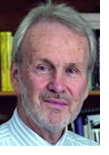 Robin Alexander (1941- ) was educated at the Perse School and the universities of Cambridge, Durham, London and Manchester.
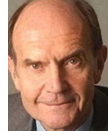 Jim Rose trained as a teacher at Kesteven College in Lincolnshire. He held several primary school posts, including two headships, and worked on the Nuffield Science Project at Leicester's School of Education.
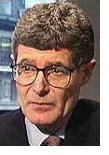 Chris Woodhead (1946-2015) attended Wallington County Grammar School in Surrey and read English at Bristol and Keele.